

Commentary
Rym Momtaz
{
  "authors": [
    "Rym Momtaz"
  ],
  "type": "commentary",
  "blog": "Strategic Europe",
  "centerAffiliationAll": "",
  "centers": [
    "Carnegie Endowment for International Peace",
    "Carnegie Europe"
  ],
  "englishNewsletterAll": "",
  "nonEnglishNewsletterAll": "",
  "primaryCenter": "Carnegie Europe",
  "programAffiliation": "",
  "regions": [
    "Europe",
    "United States"
  ],
  "topics": [
    "EU",
    "Democracy"
  ]
}
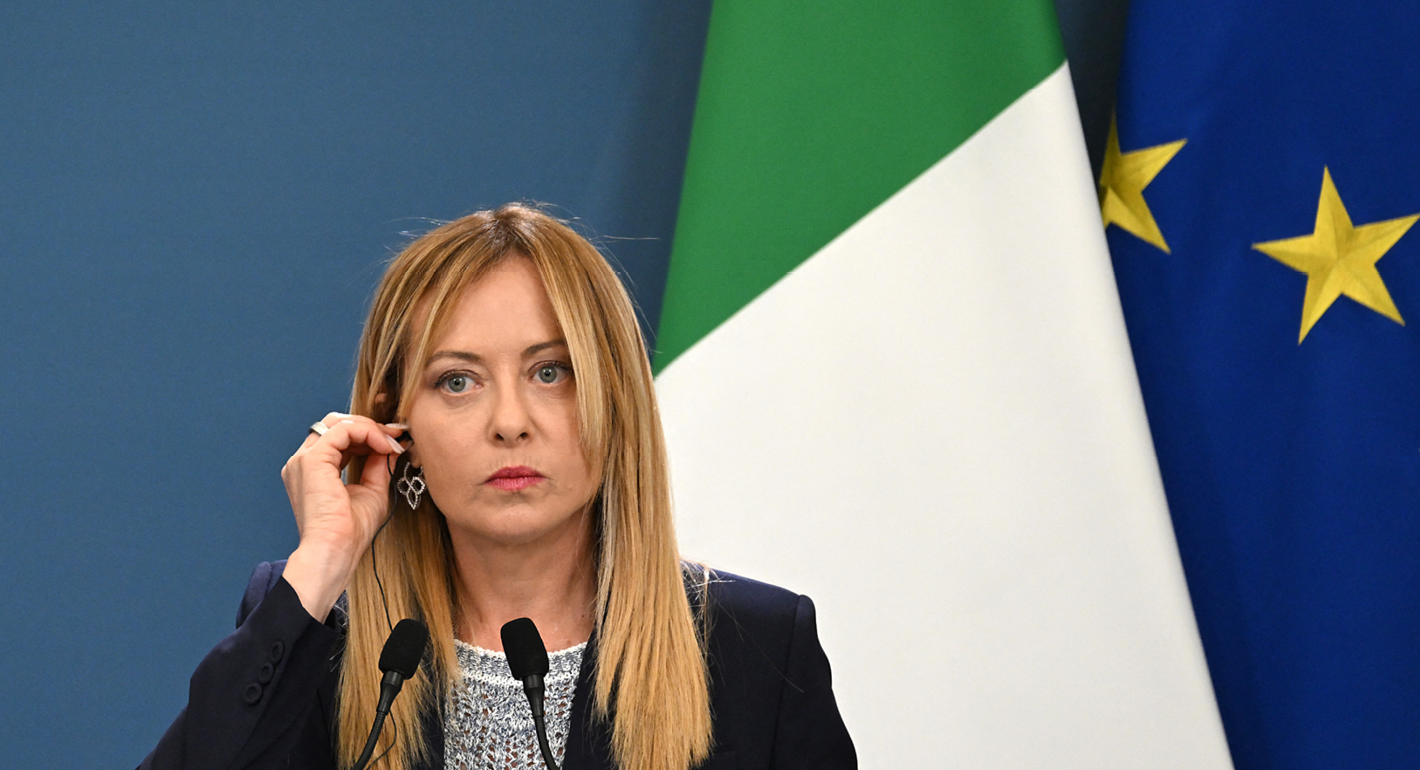
Source: Getty
When Giorgia Meloni very publicly rebuked Donald Trump’s disparaging remarks about her, it surprised many who saw her as a European extension of Trumpism. Is the spat a sign of trouble in the radical right’s transatlantic axis?
Research Coordinator and Head of the Global Actors Program, Italian Institute of International Relations (IAI)
The split between Italian Prime Minister Giorgia Meloni and U.S. President Donald Trump is political and personal far more than it is ideological.
Meloni continues to subscribe to a civilizational understanding of the West centered on its Christian heritage, cultural—and implicitly ethnic—homogeneity, and the defense of traditional values. She also remains convinced that Europe’s security and strategic role ultimately depend on close alignment with the United States in defending that Western heritage. In this sense, her worldview remains compatible with that of much of U.S. national conservativism.
The break with Trump is instead best understood as electoral recalibration. With the U.S. president deeply unpopular in Italy, their close relationship had become a significant political liability. Distancing herself from him allows Meloni to deprive the opposition of a main line of attack, while repositioning herself as an autonomous leader of the European nationalist right.
Her gamble is that she can embody a post-Trump nationalist conservatism committed to national sovereignty over supranationalism and yet still embedded in a broader Western civilizational project. Whether she can persuade Italian voters without alienating the American right remains uncertain. The ideological affinity endures, and many U.S. conservatives retain an interest in rebuilding ties with her.
Visiting Scholar, Carnegie Europe
The so-called civilizational axis pursued by the Make America Great Again (MAGA) movement was always more mirage than reality. It rested on the assumption that a shared rhetoric about tradition, Christianity, and sovereignty could bind together political actors whose core instinct is, in fact, nationalist and inward-looking. In practice, and in policy, such movements do not align—they compete. And any historical reference to an axis was shattered by MAGA’s designation of Europe itself as an enemy.
While Meloni has borrowed elements of Trumpism’s language, her political project remains rooted in Italian interests and sensitivities, as well as in the European civilizational axis. The unease with U.S. Vice-President JD Vance’s criticisms of the Pope—remarks that crossed a cultural red line in Italy—epitomized that. What passes as civilizational unity quickly unravels when confronted with deeply embedded national norms.
More fundamentally, Trump himself has done little to sustain any coherent transatlantic alignment. His foreign policy instincts—episodic, unilateral, and often disruptive—undermine the very possibility of a shared strategic vision. The decision to escalate tensions with Iran, for instance, is precisely the kind of move European leaders, including Meloni, cannot easily support.
If there was ever an axis, it was rhetorical rather than real—and it has fractured along the predictable fault lines of nationalism.
Distinguished Research Professor, University of Georgia
For almost a year and a half, it was a close race between Giorgia Meloni and NATO Secretary General Mark Rutte over who was the best Trump whisperer. Now, Rutte seems to have Trump all to himself. With elections on the horizon, the U.S. president’s attacks on the Pope were one electoral risk too many for Meloni to take. But does this mean the transatlantic far-right love affair is over? Not really.
Just like their flirtation with Russian President Vladimir Putin, until he reinvaded Ukraine in 2022, Meloni and other European far-right leaders never truly saw Trump as one of them. However, it was convenient to have a powerful friend who shares your enemies. But even more than Putin, Trump is unreliable and visionless, which makes him a liability for ambitious far-right leaders who do have a plan, like Meloni. For now, the Italian prime minister needs the Catholics (and the Europeans) more than Trump, but that can change at any time—for instance, after she gets reelected. Still, whatever the future holds, the European far right’s relationship with Trump will remain cautious and based more on what they want to destroy than what they want to create.
Senior Research Fellow, Centre for European Reform
As I wrote right after Trump’s 2024 election, there was always an inherent contradiction in nationalist leaders who want to put America first, or Italy first, or Germany first banding together. Especially when it has been clear from the outset that Trump’s second term policies would harm Europe. The growing sense of momentum among far right politicians across the Atlantic sustained this ideological alliance for some time, but it was going to take a turn at some point—particularly as European populations increasingly dislike Trump.
The bigger problem is that this momentum has helped to mainstream many far-right policy ideas, whether on so-called remigration, the role of religion and gender-normative roles, or the push back against an energy transition intended to help stave off the climate crisis. The latter has been felt acutely across Europe over the course of successive heat waves. Regardless of whether their political proponents get along from one week to the next, these ideas will continue to flourish in far-right hubs of thinking on both sides of the Atlantic—in right-wing think tanks, alternative media, and online, while gradually pushing the Overton window further and further to the right. In many ways, the illiberal genie is out of the bottle.
Research Director, European Council on Foreign Relations
Meloni has not broken the MAGA civilizational axis. She has revealed why it will always have cracks. The project of a nationalist internationale contains an inherent contradiction: Movements built on sovereignty, civilizational grievance, and the cult of national greatness will struggle to form durable partnerships. Add the narcissistic personality disorders that are rife across this political family, and personal clashes like the Trump-Meloni social media war become almost inevitable.
But those cracks should not be mistaken for collapse. What binds these forces together is their common liberal enemy. Their leaders all define themselves against multiculturalism, migration, supranational constraints, and the cultural authority of progressive elites. Those shared enemies will continue to draw them together, irrespective of domestic politics or egos.
Europe should therefore expect American power, money, media attention, and diplomatic effort to keep pushing its politics in illiberal directions. The United States will remain a gravitational force for the continent’s right. But the problems between Trump and Meloni are a useful reminder that this force will not always be effective. Strongmen do not excel at partnership. They can inspire, pressure, and at times help one another. They are much worse at building alliances.
Director, Democracy, Conflict and Governance Program, Carnegie Endowment for International Peace
One must be careful not to overestimate the importance of the recent Trump-Meloni rift. Whatever axis MAGA created in 2025 with European parties on the right had already substantially corroded as Trump’s popularity slumped across the continent. Some of the major players in this relationship, like Jordan Bardella of France’s National Rally, have distanced themselves from the U.S. president. Even Nigel Farage, leader of Reform UK, has gone quiet on a friendship with Trump that was once, well, his trump card. The rift is thus best understood as another step on a descending MAGA-Europe staircase.
Avoiding overestimation of the rift is also important because as the world has learned from watching Trump in action for many years now, while he is quick to anger, he is also sometimes willing to forgive and move on. His on-again, off-again bromance with Elon Musk is a prime example. A bitter feud between the two erupted in June 2025, fueled by Musk’s criticisms of Trump’s “one big beautiful” spending bill. But by year’s end the two were back to cozy relations. Thus, the world may see Trump and Meloni on good terms again before long.
Policy Analyst, European Policy Centre
The problem with the nationalist internationale is, obviously, that it is way more nationalist than international. Donald Trump does not wish to construct an international far-right movement, he wants to construct a movement that pays tribute to himself. In this sense, he asked of Meloni the same thing he asks of other supporters: a public humiliation designed to display loyalty. This kind of attack on national pride is precisely the kind of red line far-right nationalist movements were supposed not to cross.
However, let us remember that there was little more than rhetoric to the Meloni-Trump alliance. While Meloni portrayed herself as a bridge between the EU and United States, it is difficult to point to any concrete outcome that resulted from her diplomatic efforts. They certainly did not prevent Trump’s attacks and threats against the union’s trade and sovereignty, including over Greenland, which have made him increasingly unpopular, with many former supporters in the bloc distancing themselves from him. Moreover, given Italy’s importance in Europe, Meloni has been increasingly courted by both German Chancellor Friedrich Merz and European Commission President Ursula von der Leyen in the union’s normal functioning. In the end, in the Meloni-Trump relationship, the logic of national interest has prevailed over ideological commonalities.
Program Manager, Swedish Institute of International Affairs
While the latest spat between Meloni and Trump is a sign of a growing rupture between the American president and his European far-right allies, its impact shouldn’t be overstated. Even as Meloni was still receiving praise for her refusal to kneel at the altar of Trump and submit to his humiliation ritual, the Italian prime minister expressed her intention to mend the relationship and resume business as usual.
Meloni’s strategy seems motivated not only by her pragmatic approach to Italy’s geopolitical interests but also her deep ideological commitment to the civilizational axis of the far right. In comparison, there seems to be one leader who does have the power, political disposition, and personal temperament needed to seriously threaten that axis: Trump himself. For the president, personal grievances remain paramount.
Even so, alternative leaders within the MAGA movement and their European allies are sensing what Trump is not: There is blood in the water, and a post-Trump future on the horizon. Thus, Europe’s far right is learning to strike a new balance: Withdrawing support for Trump as his popularity in Europe plummets while maintaining relations with the MAGA movement and its more principled ideological leaders. Protecting their coalition and refocusing attention on common enemies is their priority.
Subscribe to Strategic Europe, delivered to you weekdays!

Editor in Chief, Strategic Europe
Rym Momtaz is the editor in chief of Carnegie Europe’s blog Strategic Europe. A multiple Emmy award-winning journalist-turned-analyst, she specializes in Europe and the Middle East and the interplay between those two spaces.
Recent Work
Rym Momtaz
Rym Momtaz, ed.
Carnegie does not take institutional positions on public policy issues; the views represented herein are those of the author(s) and do not necessarily reflect the views of Carnegie, its staff, or its trustees.
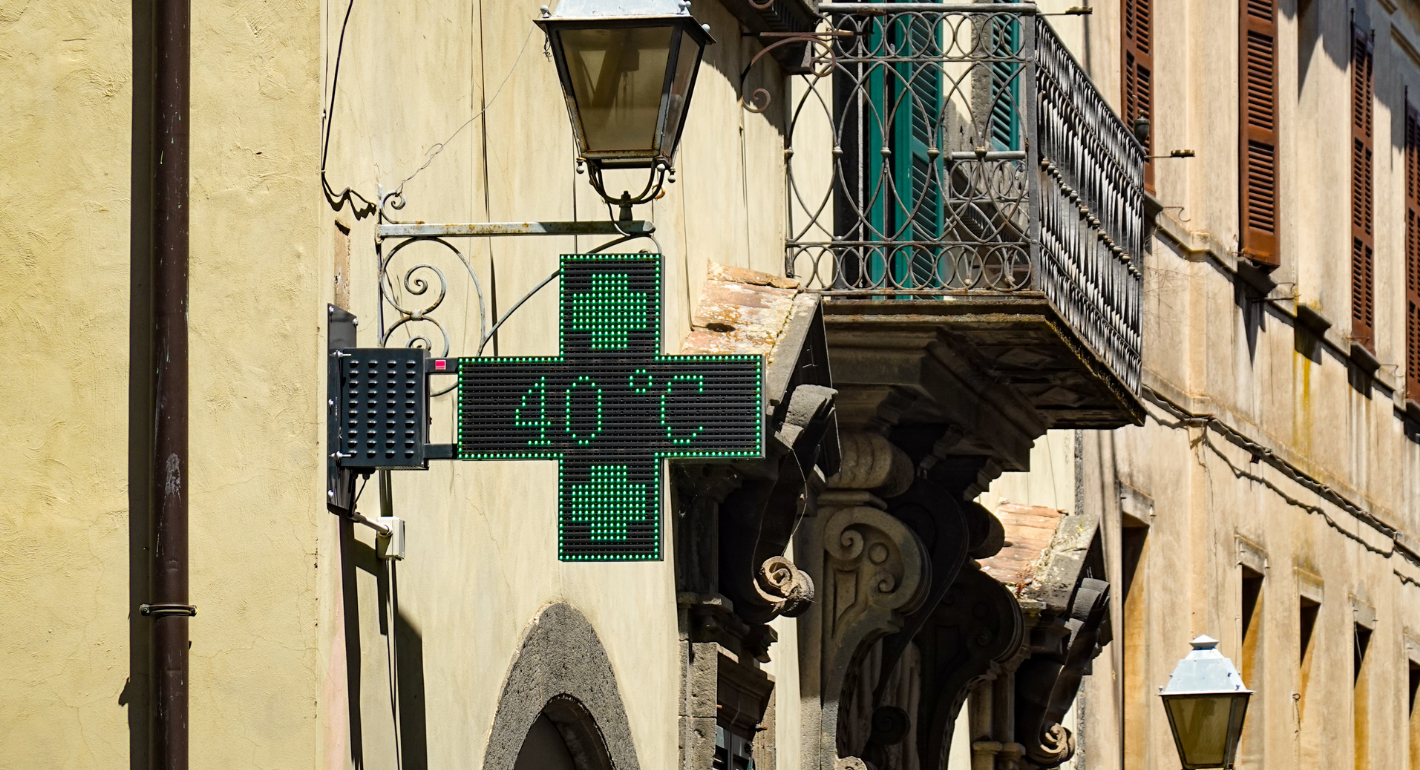
Western Europe’s dual-use infrastructure melted down during its latest heat wave. If a predicted hot weather event can take the continent by surprise, what chance does it have to withstand unexpected geopolitical crises?
Rym Momtaz
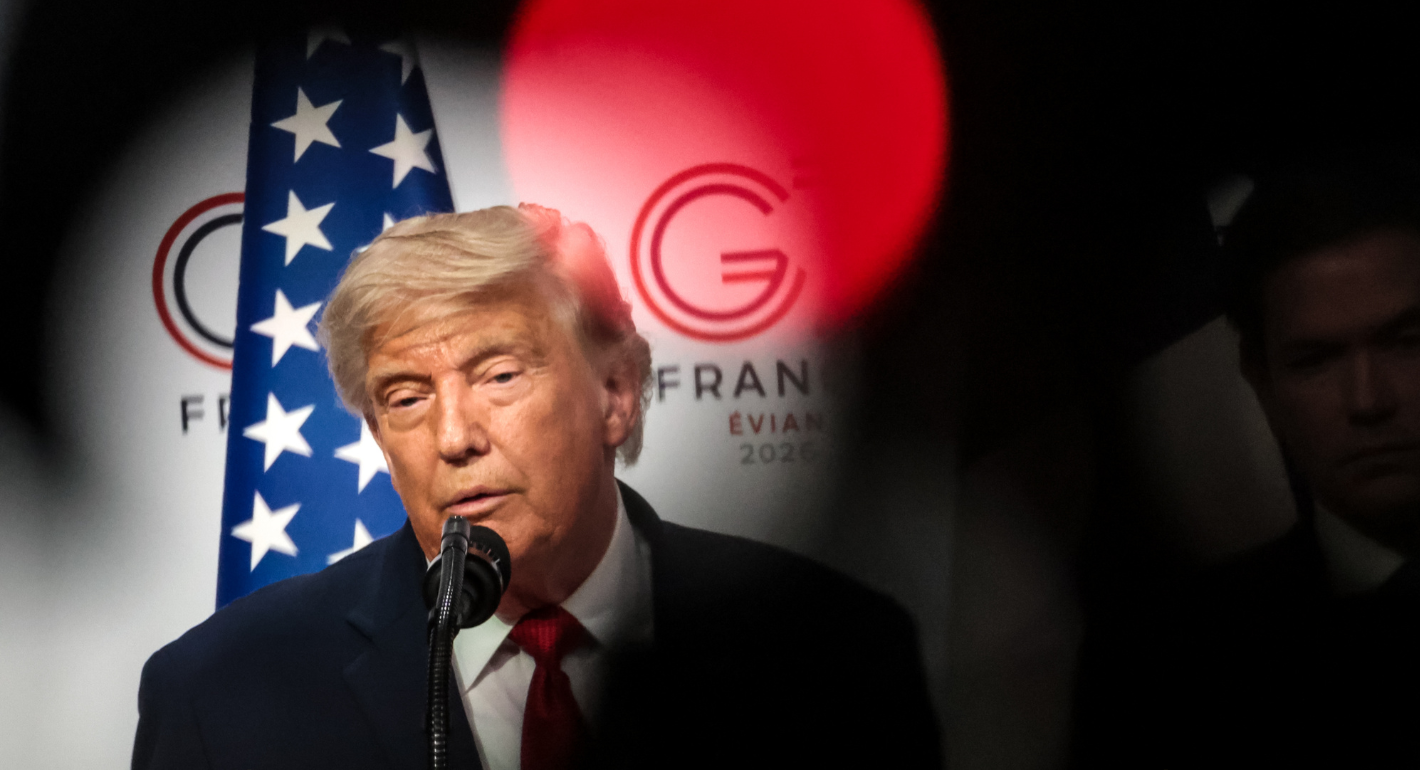
There is an elephant in the room when it comes to the EU’s upcoming security strategy: Donald Trump. Unless European leaders acknowledge the depth of the transatlantic crisis, true autonomy will remain out of reach.

Stefan Lehne

Defense tech innovations will be at the heart of Europe’s new security strategy. But so far, Brussels has been making moves without a broader plan, undermining readiness and credibility.

Raluca Csernatoni

When the U.S.-Iran memorandum of understanding was announced, the UK, France, Germany, and Italy declared their readiness to help demine the Strait of Hormuz and lift nuclear sanctions on Tehran. But does Europe need new tools to recover a diplomatic role?
Rym Momtaz, ed.
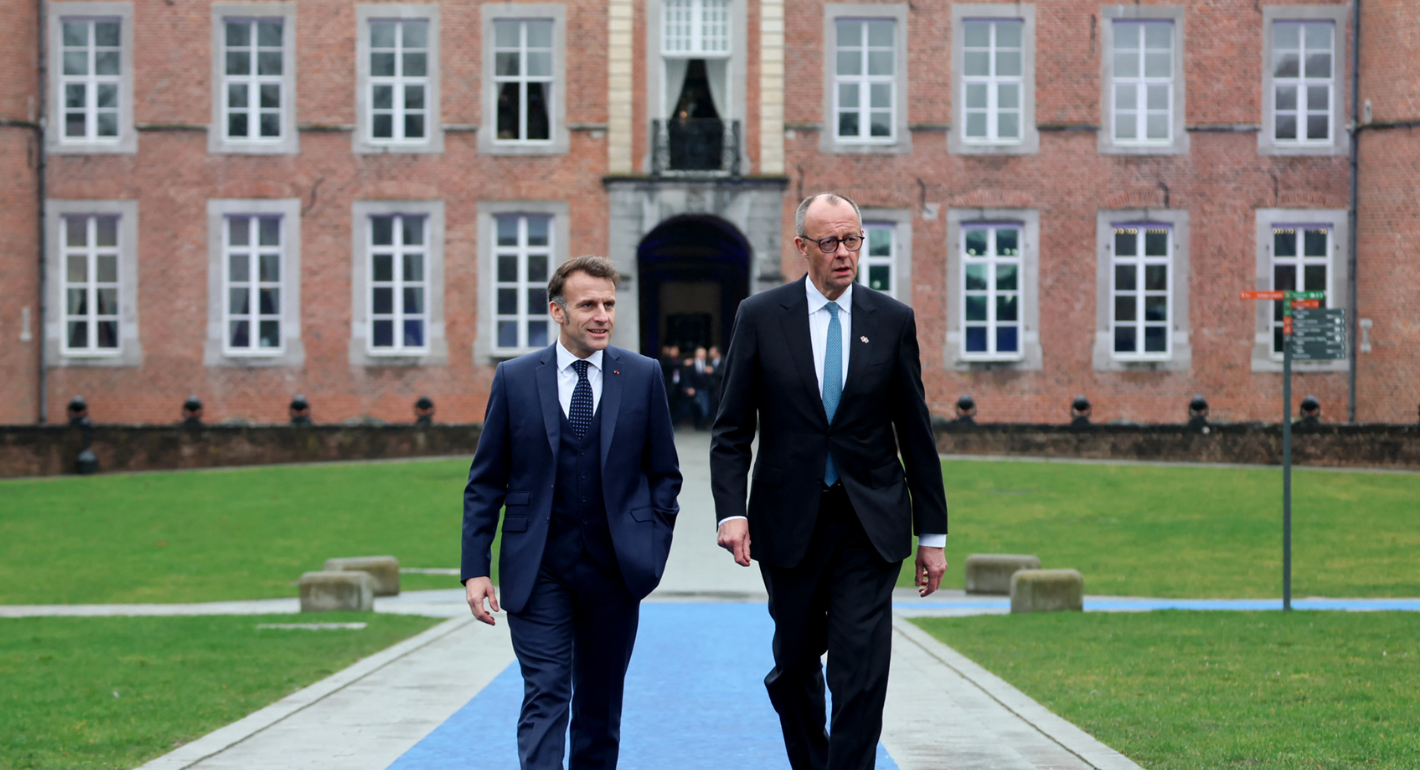
The Franco-German relationship is on the rocks again. But unlike previous moments of tension, the epochal changes on the world stage require that both step up investment in their bilateral ties.
Rym Momtaz